Entry · Ref MIXJTPIY
Why Caretaker Consistency in Little Memory Care Homes Matters for Seniors
- Posted
- 2026-10-12
- Last amended
- 2026-10-12
- Account
- @beckettqpxc020
Business Name: BeeHive Assisted Living Homes of Rio Rancho NM #1 - Dementia Care & Memory Care
Address: 204 Silent Spring Rd NE, Rio Rancho, NM 87124
Phone: (505) 221-6400
BeeHive Assisted Living Homes of Rio Rancho NM #1 - Dementia Care & Memory Care
BeeHive Assisted Living Homes of Rio Rancho NM #1 - Dementia Care & Memory Care is a premier Rio Rancho Assisted Living facilities and the perfect transition from an independent living facility or environment. Our Alzheimer care in Rio Rancho, NM is designed to be smaller to create a more intimate atmosphere and to provide a family feel while our residents experience exceptional quality care. We promote memory care assisted living with caregivers who are here to help. Memory care assisted living is one of the most specialized types of senior living facilities you'll find. Dementia care assisted living in Rio Rancho NM offers catered memory care services, attention and medication management, often in a secure dementia assisted living in Rio Rancho or nursing home setting.
204 Silent Spring Rd NE, Rio Rancho, NM 87124
Business Hours
Families rarely start their look for senior care thinking about staffing patterns or retention rates. They start with worry. A parent is leaving the home they understand. A partner is progressing in dementia and it is no longer safe to manage alone. The questions they ask aloud have to do with security, activities, cost. The concerns they feel in their gut are easier:
Who is going to be with my loved one when I am not there?
Will that individual in fact know them?In small memory care homes, the response to those concerns often comes down to something: caretaker consistency. Not simply how many individuals are on the payroll, but whether the exact same people show up day after day, at comparable times, forming genuine relationships with the locals they serve.
That one detail quietly shapes practically everything that follows, from how well an individual with dementia eats and sleeps to how typically they land in the ER.
What "caretaker consistency" actually means
Caregiver consistency is more than a low turnover rate printed in a pamphlet. In practice, it has three layers.
First, the very same caretakers are arranged with the exact same locals the majority of the time, particularly throughout crucial regimens like mornings, evenings, and bathing.
Second, those caregivers stay in their functions long enough to establish a deep, nearly instinctive understanding of each person: their history, their peculiarities, their distress signals, what calms them.
Third, the home's culture and systems are constructed to safeguard these relationships, not constantly interrupt them with floating staff, firm employees, or moving assignments.
In large assisted living and memory care communities, even devoted teams can struggle to deliver all three. With dozens of homeowners per wing and a turning cast of part-time personnel, it is tough to maintain stable pairings. Little memory care homes, generally with 6 to 16 residents, are structurally better fit for this sort of connection, however it does not happen immediately. It has to be assisted living rio rancho nm intentional.
How little memory care homes differ from larger communities
People usage "assisted living" as a catchall, however the truth on the ground differs widely. On one end of the spectrum, you see big campuses with 60, 80, even 120 citizens in the building, broken into various areas or floorings. On the other end, you have little residential memory care homes, often licensed as assisted living, that look more like a traditional house: one kitchen area, one living room, a handful of bedrooms.
From a staffing perspective, the distinctions are considerable. In a larger community:
- There may be numerous shifts of caretakers distributed throughout numerous units.
- Floaters and medication techs might move between wings throughout the same day.
- Restorative assistants, activities staff, and dining personnel add more faces to the mix.
In a little memory care home, the same 2 or 3 caretakers frequently deal with meals, personal care, house cleaning, and a good part of activities. Homeowners may see only 6 to 10 staff members in a common week, including the manager and nurse.
When dementia care is involved, that little circle is a benefit. Individuals with cognitive impairment often do much better with a stable, foreseeable cast of characters. Each new face is another unidentified to process, another name to forget, another set of hands to endure in really individual moments, like bathing or toileting.
Why consistency matters so much for dementia care
If you have actually ever viewed a person with dementia navigate their day, you know just how much energy it takes. They are continuously completing blanks: Where am I? Who is this? What occurs next? Who is safe?
Caregiver consistency alleviates that cognitive load. When the same person appears every morning with a familiar greeting and the very same gentle touch on the shoulder, regular begins to carry some of the weight that memory can no longer hold.
Several particular advantages show up in little, constant teams.
Reduced anxiety and "behavioral" symptoms
Labeling habits as "agitation" or "resistance" frequently misses the point. Many so called behaviors are merely expressions of worry or confusion. A resident might push away assist from a complete stranger during a shower but easily accept the exact same support from the caregiver they called "the one who constantly brings my coffee."
In homes where caretaker assignments are stable, I have actually seen citizens when identified "unmanageable" bathe calmly, eat well, and even laugh during care. The distinction was not a new medication or a fancy behavior strategy. It was that the caretakers knew, from weeks or months of repeating, exactly how to approach that person, how to rate the interaction, which words to prevent and which jokes generally worked.
Better communication without additional paperwork
In big buildings, personnel frequently rely on written notes and electronic charting to communicate modifications. Those tools matter, but they are no alternative to a caregiver who simply knows that Mrs. Anderson constantly hums under her breath when she is comfy, so when she goes peaceful throughout a transfer, something is wrong.
Consistency constructs that kind of real-time, nonverbal awareness. In the small homes I have actually worked with, an experienced caretaker can typically inform you before breakfast which citizens are "off" that day and how worried they are, long before important indications or lab results catch up. That early detection can avoid avoidable hospital visits, which are particularly disorienting for people with dementia.
Stronger trust during intimate care
Dementia care is hands-on. Caretakers aid with toileting, bathing, dressing, oral care. These are intimate, susceptible moments. Think of waking in a strange room with a stranger's hands on your body, and you only partly comprehend what is taking place. The fight or flight action is not surprising.
With constant staff, those moments can feel more like a familiar regimen. The resident may not keep in mind the caregiver's name, but their body keeps in mind the rhythm of the interaction and the intonation. Trust resides in those little details.
In small memory care homes where the same caretaker helps with showers week after week, it prevails to see less resistance, less falls associated to pressing away aid, and more dignity preserved.
Meaningful relationships, even when memory fades
Families often presume that because a loved one with innovative dementia can not recall names, relationships no longer matter. The opposite is generally true. The emotional memory system frequently outlasts factual memory.
I have watched locals illuminate when a familiar caregiver walks in, even when they can not say precisely who she is. They lean toward her, take her hand, and unwind in methods they do not with others. That action is not about bio, it has to do with repeated positive interactions gradually. In small homes with stable groups, those micro-connections build up into a tangible sense of emotional safety.
How small homes can get consistency right (and incorrect)
Size alone does not guarantee consistency. A little building with chaotic scheduling and rapid turnover can feel as unsteady as a big facility. The distinction comes from the method leadership designs staffing, training, and day-to-day life.
Some small memory care homes use "universal employee" designs, where caretakers prepare meals, aid with activities, and provide individual care. Done well, this produces continuity throughout the entire day. The resident sees the exact same face at breakfast, during their shower, and again in the afternoon group. That repetition develops comfort.
Done poorly, universal staffing can lead to burnout and rushed care. When 2 caregivers are extended throughout a lot of tasks, they might switch projects frequently simply to make it through the shift. Homeowners feel the churn, even if the overall headcount is low.
From the inside, the most steady homes share a couple of qualities: managers who still work the flooring when required, schedules that honor staff member preferences as much as possible, and a culture that prizes relationships over documentation. The management message is clear: "We safeguard constant tasks because they assist our homeowners thrive."
When little homes get it wrong, it is typically not from bad intent. It comes from chronic understaffing, poor pay, or a belief that caretakers are interchangeable. In those settings, you see a near constant shuffle of staff, with firm workers plugging gaps. Residents fulfill a new "helper" every week. Family members start to feel they are training personnel from scratch on every visit. In time, both trust and quality erode.
The impact on households and their role
For households, caregiver consistency is typically the very first thing they observe on a gut level, even if they do not have language for it. On an initial tour, a child might say, "Everybody here appears to understand each other," or, "I keep seeing the exact same two staff upstairs." Those impressions matter.
Once a loved one relocations in, consistent caregivers become anchors for the family too. The boy who visits after work wishes to talk with someone who really knows how his mother's week has been, not someone reading off a chart. A familiar caregiver can say, "She has been more agitated around 4 pm, once we start her puzzles she cools down," which is even more particular than generic reassurance.
Families in little memory care homes with steady teams tend to report:
- More detailed updates about subtle changes in mood, hunger, or mobility.
- Greater peace of mind when they can not visit, because they trust specific people, not just the organization.
- A sensation of partnership, where caretakers and member of the family trade stories and strategies about what works for this person.
When families visit and see an ever-changing cast of caretakers, the opposite happens. They invest more time orienting new staff, repeating the same biographical information, and attempting to promote for choices that seem to be lost in the shuffle. With time, that can strain everyone and might activate unnecessary moves.
Subtle indications that caregiver consistency is strong
You can learn a lot about a home's staffing reality without ever seeing a schedule. Throughout a tour or visit, focus on what happens in the "in-between" moments.
Here are a few concrete indications that normally signal strong consistency:
- Caregivers call homeowners by their chosen names and nicknames without inspecting a chart.
- Staff anticipate requirements before they are spoken, such as using the washroom at the right time or bringing a sweater when somebody always gets cold at 3 pm.
- Conversations between staff and locals refer to shared experiences or continuous jokes.
- Families welcome caretakers by name and clearly understand their work patterns, stating things like, "Oh, you are normally with Dad in the early mornings."
These little details are tough to phony. They grow from repetition and authentic familiarity.
The relationship in between consistency and safety
Safety in dementia care is frequently framed around locked doors and alarms, however human consistency is at least as important. Homeowners who trust their caretakers are more likely to accept redirection when they attempt to leave, more happy to wear their walker belt, and more cooperative with medications that keep chronic conditions stable.
Inconsistent staffing raises threat in a couple of ways. New or agency caregivers might not know that Mr. S insists on standing right away after moving to the toilet, which has led to falls in the past. They may not acknowledge that Ms. J's brand-new silence throughout meals is a warning, not a characteristic. And they may not have the connection required to de-escalate roaming or pacing before it crosses into real elopement risk.
In little memory care homes, the safeguard is typically the caretaker's memory and instinct. I have actually seen staff capture the earliest indications of a urinary tract infection simply since "she is not humming with the music today." That sort of observation just emerges when the same person is present over lots of days and weeks.
Balancing consistency with staff wellbeing
There is a stress here that experienced senior care suppliers understand well. The more you lock in assignments, the more you risk burning out staff who are paired with residents whose requirements are extreme. Primary project to a resident who is physically aggressive or who calls out all night can take a toll.
The finest little homes deal with consistency as a guiding principle, not a rigid guideline. They intend to keep a steady core group around each resident, while still turning particular tasks or time blocks to provide caretakers breaks and cross-training. They also buy training on dementia care strategies, body mechanics, and tension management, so personnel are not left white-knuckling through difficult interactions.
For families, it is sensible to ask about both sides of this equation. Excessive rotation produces instability for citizens. Insufficient can make personnel feel caught, which eventually causes turnover, undoing the really consistency you were trying to protect.
What caregiver consistency looks like in respite care
Respite care is frequently neglected in this discussion. Families sometimes utilize short stays in a memory care setting to recuperate from caregiver burnout, travel, or test whether residential care is appropriate.
In big communities, respite residents might bounce between whichever caregivers are free that day. Staff do their finest, however the short-lived nature of the stay can lower the reward to develop deep familiarity.
Some small memory care homes approach respite care differently. They deliberately fold the respite visitor into existing caregiver tasks. Even if the stay lasts only a few weeks, the same 2 or 3 caretakers focus on finding out that person's routines and preferences, simply as they would for a long-lasting resident.
This method pays off in a few ways. It typically makes the shift less traumatic for the resident, who is already handling a new environment. It also gives households a more accurate photo of what continuous memory care in that home will feel like, due to the fact that they see the genuine relationships forming, not a series of newbie interactions.
If you are exploring respite care for a loved one with dementia, it deserves asking how the home manages assignments for short-stay residents. The answer will tell you a lot about the home's values.
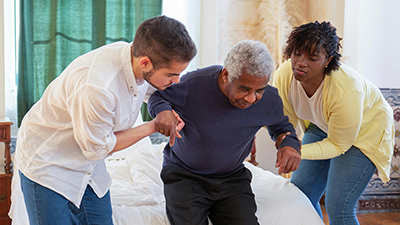
Questions families can ask when exploring little memory care homes
Families sometimes feel awkward inquiring about staffing, as if they are challenging the home. Thoughtful operators actually invite these questions, since strong caretaker consistency is a point of pride.
Here are useful concerns that often open a productive discussion:
- "The number of various caretakers would my mom normally see in a day and in a week?"
- "Do you designate the exact same caregivers to the very same homeowners the majority of the time, especially for early mornings, nights, and showers?"
- "What percentage of your caretakers have worked here longer than a year?"
- "How frequently do you depend on firm staff or floaters?"
- "If my dad does especially well with one caretaker, can you attempt to keep that pairing as consistent as possible?"
The exact numbers matter less than the clearness and confidence in the responses. A little home that values consistency will normally have concrete examples and information at hand.
When change is actually helpful
Consistency must not become rigidity. There are minutes when altering caretaker assignments is the most compassionate choice.
Sometimes, in spite of best shots, a resident and a caregiver merely do not "click." Their interaction styles clash. Or an early negative interaction has actually imprinted so highly that the resident reacts with worry every time that caretaker goes into the space. Forcing that relationship to continue in the name of consistency is not kindness.
Health modifications can likewise necessitate new pairings. As a resident's requirements increase, it might make good sense to match them with a caregiver who has more physical strength or specialized training. In progressive dementia, various phases might require different skills.
The secret is to make changes thoughtfully, with clear interaction to both staff and household, and then to restore new patterns as quickly as possible. Turmoil followed by steady new regimens is far better than continuous low-level churn.
How consistency forms the day-to-day rhythm of the home
The best way to photo caretaker consistency is not as a statistic, but as a rhythm. In little memory care homes with strong, steady groups, the day unfolds with a quiet predictability.
The exact same caretaker who knows which resident likes their coffee black and which insists on two creams is likewise the one who notices an emerging limp, or who bears in mind that Wednesday is video call day with a child out of state. Mealtimes feel less like a restaurant and more like a household table, since individuals serving the food have actually served it hundreds of times to the exact same faces.
Activities end up being deeper also. A constant caretaker leading a small group understands precisely which residents will sign up with a sing-along and who chooses to fold towels close by, listening however not singing. That enables involvement without pressure, which is essential in dementia care.
In contrast, a home with frequent staff modifications feels disjointed. The calendar may list a lot of programs, but residents do not know the individual leading them. Little but essential details slip: the favorite mug, the seat near the window, the quiet ritual of cream on arthritic hands before bed. Those are the details that make an assisted living home seem like home instead of a hotel.
Bringing it back to what matters
Families choosing memory care, respite care, or assisted living for a loved one with dementia face no shortage of marketing language. Every pamphlet discusses person-centered care, engaging activities, and safety. Caregiver consistency hardly ever gets strong print, yet it is among the greatest predictors of how those pledges will play out.
In little memory care homes, constant staffing can change the experience for homeowners and families. It lowers stress and anxiety, enhances communication, boosts security, and protects self-respect in day-to-day care. It likewise provides households identifiable people to trust, not simply an organization's logo.

When you tour or revisit potential homes, it assists to look beyond decoration, activities calendars, and even the nurse's credentials. Enjoy the method caretakers and residents interact, listen for inside jokes, and ask who will actually exist on a common Tuesday at 7 am and 7 pm.
Senior care, at its finest, is not about structures or programs. It has to do with relationships, duplicated frequently enough, with sufficient heart and ability, that even a person whose memory is fading can feel, deep down, "These individuals understand me. And I am safe with them."
BeeHive Assisted Living Homes of Rio Rancho NM #1 - Dementia Care & Memory Care provides assisted living care
BeeHive Assisted Living Homes of Rio Rancho NM #1 - Dementia Care & Memory Care provides memory care services
BeeHive Assisted Living Homes of Rio Rancho NM #1 - Dementia Care & Memory Care provides respite care services
BeeHive Assisted Living Homes of Rio Rancho NM #1 - Dementia Care & Memory Care supports assistance with bathing and grooming
BeeHive Assisted Living Homes of Rio Rancho NM #1 - Dementia Care & Memory Care offers private bedrooms with private bathrooms
BeeHive Assisted Living Homes of Rio Rancho NM #1 - Dementia Care & Memory Care provides medication monitoring and documentation
BeeHive Assisted Living Homes of Rio Rancho NM #1 - Dementia Care & Memory Care serves dietitian-approved meals
BeeHive Assisted Living Homes of Rio Rancho NM #1 - Dementia Care & Memory Care provides housekeeping services
BeeHive Assisted Living Homes of Rio Rancho NM #1 - Dementia Care & Memory Care provides laundry services
BeeHive Assisted Living Homes of Rio Rancho NM #1 - Dementia Care & Memory Care offers community dining and social engagement activities
BeeHive Assisted Living Homes of Rio Rancho NM #1 - Dementia Care & Memory Care features life enrichment activities
BeeHive Assisted Living Homes of Rio Rancho NM #1 - Dementia Care & Memory Care supports personal care assistance during meals and daily routines
BeeHive Assisted Living Homes of Rio Rancho NM #1 - Dementia Care & Memory Care promotes frequent physical and mental exercise opportunities
BeeHive Assisted Living Homes of Rio Rancho NM #1 - Dementia Care & Memory Care provides a home-like residential environment
BeeHive Assisted Living Homes of Rio Rancho NM #1 - Dementia Care & Memory Care creates customized care plans as residents’ needs change
BeeHive Assisted Living Homes of Rio Rancho NM #1 - Dementia Care & Memory Care assesses individual resident care needs
BeeHive Assisted Living Homes of Rio Rancho NM #1 - Dementia Care & Memory Care accepts private pay and long-term care insurance
BeeHive Assisted Living Homes of Rio Rancho NM #1 - Dementia Care & Memory Care assists qualified veterans with Aid and Attendance benefits
BeeHive Assisted Living Homes of Rio Rancho NM #1 - Dementia Care & Memory Care encourages meaningful resident-to-staff relationships
BeeHive Assisted Living Homes of Rio Rancho NM #1 - Dementia Care & Memory Care delivers compassionate, attentive senior care focused on dignity and comfort
BeeHive Assisted Living Homes of Rio Rancho NM #1 - Dementia Care & Memory Care has a phone number of (505) 221-6400
BeeHive Assisted Living Homes of Rio Rancho NM #1 - Dementia Care & Memory Care has an address of 204 Silent Spring Rd NE, Rio Rancho, NM 87124
BeeHive Assisted Living Homes of Rio Rancho NM #1 - Dementia Care & Memory Care has a website https://beehivehomes.com/locations/rio-rancho/
BeeHive Assisted Living Homes of Rio Rancho NM #1 - Dementia Care & Memory Care has Google Maps listing https://maps.app.goo.gl/FhSFajkWCGmtFcR77
BeeHive Assisted Living Homes of Rio Rancho NM #1 - Dementia Care & Memory Care has Facebook page https://www.facebook.com/BeeHiveHomesRioRancho
BeeHive Assisted Living Homes of Rio Rancho NM #1 - Dementia Care & Memory Care has a YouTube Channel at https://www.youtube.com/@WelcomeHomeBeeHiveHomes
BeeHive Assisted Living Homes of Rio Rancho NM #1 - Dementia Care & Memory Care won Top Memory Care Homes 2025
BeeHive Assisted Living Homes of Rio Rancho NM #1 - Dementia Care & Memory Care earned Best Customer Service Award 2024
BeeHive Assisted Living Homes of Rio Rancho NM #1 - Dementia Care & Memory Care placed 1st for Assisted Living Communities 2025
People Also Ask about BeeHive Assisted Living Homes of Rio Rancho NM #1 - Dementia Care & Memory Care
What is BeeHive Homes of Rio Rancho Living monthly room rate?
The rate depends on the level of care that is needed (see Pricing Guide above). We do a pre-admission evaluation for each resident to determine the level of care needed. The monthly rate is based on this evaluation. There are no hidden costs or fees
Can residents stay in BeeHive Homes of Rio Rancho until the end of their life?
Usually yes. There are exceptions, such as when there are safety issues with the resident, or they need 24 hour skilled nursing services
Does BeeHive Homes of Rio Rancho have a nurse on staff?
No, but each BeeHive Home has a consulting Nurse available 24 – 7. if nursing services are needed, a doctor can order home health to come into the home
What are BeeHive Homes of Rio Rancho visiting hours?
Visiting hours are adjusted to accommodate the families and the resident’s needs… just not too early or too late
Do we have couple’s rooms available?
Yes, each home has rooms designed to accommodate couples. Please ask about the availability of these rooms
Where is BeeHive Homes of Rio Rancho located?
BeeHive Homes of Rio Rancho is conveniently located at 204 Silent Spring Rd NE, Rio Rancho, NM 87124. You can easily find directions on Google Maps or call at (505) 221-6400 Monday through Friday 9:00am to 5:00pm
How can I contact BeeHive Homes of Rio Rancho?
You can contact BeeHive Assisted Living Homes of Rio Rancho NM #1 - Dementia Care & Memory Care by phone at: (505) 221-6400, visit their website at https://beehivehomes.com/locations/rio-rancho, or connect on social media via Facebook or YouTube
Visiting the Haynes Community Center and Park provides a quiet neighborhood setting where seniors in assisted living and memory care can relax outdoors during senior care and respite care visits.